Cute Dog Counting 1-20 Flashcards: An Orange-Themed Learning Tool
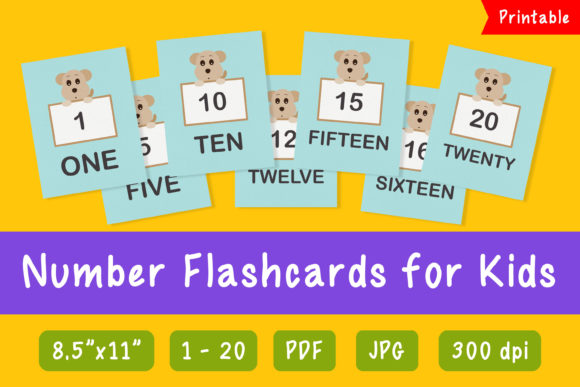
In an era where digital screens dominate the attention spans of young children, parents and educators are increasingly seeking tangible, tactile alternatives that foster genuine cognitive development. The quest for resources that balance educational rigor with engaging aesthetics often leads to a crossroads between traditional methods and modern convenience. One such resource that has garnered attention for its ability to bridge this gap is the Cute Dog Counting 1-20 Flashcards Orange. This specific set of printable materials offers more than just simple numeracy practice; it provides a structured, visually appealing pathway for early learners to grasp fundamental mathematical concepts without the overstimulation associated with electronic devices.
The Shift from Screens to Tactile Learning
Are you looking for adorable education resources for your pre-school or kindergarten students? More importantly, are you searching for activities that help children become calm and focused rather than hyperactive? The prevalence of e-games, mobile phones, and tablets in early childhood has raised concerns regarding attention fragmentation. While technology has its place, the passive consumption of content often lacks the active engagement required for deep learning.
Physical flashcards, such as the Cute Dog Counting 1-20 Flashcards Orange, require physical interaction. A child must hold the card, observe the image, and verbally or mentally process the number. This kinesthetic involvement strengthens neural pathways associated with memory and recognition. By removing the blue light and rapid-fire stimuli of screens, these cards create a calmer learning environment, allowing young minds to focus on one concept at a time.
Design Philosophy: Why Cute Cartoons Matter
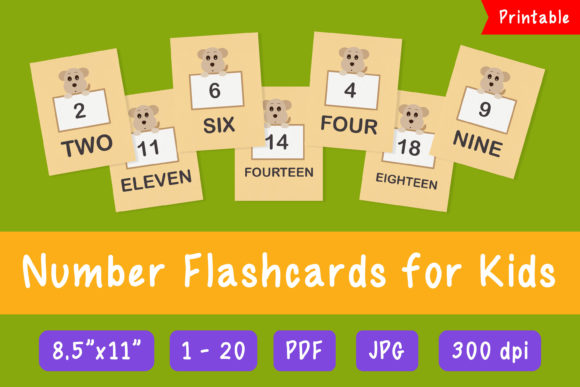
Visual appeal is not merely decorative in educational tools; it is functional. For pre-schoolers and kindergarteners, large bold lines and recognizable characters serve as anchors for attention. The Cute Dog Counting 1-20 Flashcards Orange feature charming cartoon illustrations rendered in high-contrast styles. The use of orange as a thematic color is strategic; orange is often associated with energy, enthusiasm, and warmth, which can make the learning process feel inviting rather than tedious.
The "cute" factor serves a psychological purpose. When children find the material endearing, their resistance to learning decreases. They are more likely to engage voluntarily with a card featuring an adorable dog than with a sterile, text-only numeral. These cartoons are designed with simplicity in mind, ensuring that the visual clutter does not distract from the primary objective: counting.
Comprehensive Features and Technical Specifications
Understanding the technical quality of educational resources is vital for both home users and professional educators. The Cute Dog Counting 1-20 Flashcards Orange are designed with versatility and durability in mind. Here is a breakdown of what makes this resource practical for various settings:
- Complete Numerical Range: The set includes 20 distinct flashcards, covering numbers 1 through 20. This range is ideal for early learners who are moving beyond basic single-digit recognition into early addition and grouping concepts.
- Optimal Dimensions: Each card is sized at 8.5” x 11”. This standard letter size is significant because it allows for easy printing on common home or office printers without the need for specialized paper cuts or adjustments.
- High-Resolution Quality: Saved as PDF and JPG files with 300 dpi (dots per inch), these files ensure that when printed, the images remain crisp and clear. Low-resolution images can appear pixelated, which detracts from the professional quality and may confuse young eyes.
- Convenient File Format: All files are compressed and saved in a zip file. This makes downloading and storing the resource efficient, saving space on your device while keeping all components organized.
- Portability: Once printed, these cards are easy to carry. They can be slipped into a folder, bag, or binder, making them perfect for on-the-go learning during travel or waiting room visits.
Versatility in Application
Who benefits from these flashcards? The answer extends beyond the classroom. Parents, homeschoolers, speech therapists, and early childhood educators can all integrate the Cute Dog Counting 1-20 Flashcards Orange into their daily routines.
For parents, these cards offer a screen-free activity that can be done during quiet time. Instead of handing over a tablet to keep a child occupied, a parent can spread out five cards and ask the child to arrange them in order. For educators, these cards can be used for group activities, such as having students match the number of dogs on the card to corresponding blocks or counters. For therapists, the clear visuals aid in speech development and number recognition for children with varying learning needs.
Practical Strategies for Using Counting Flashcards
Owning the resource is only the first step; utilizing it effectively determines its value. Here are several methods to maximize the educational impact of these printable cards:
- Sequential Ordering: Lay out the cards randomly and ask the child to put them in order from 1 to 20. This reinforces the concept of numerical sequence and magnitude.
- One-to-One Correspondence: Use small objects like buttons, beans, or toy figures. Ask the child to place the exact number of objects on top of the corresponding flashcard. If the card shows three dogs, they place three beans. This builds foundational math skills.
- Memory Games: Print two sets of the Cute Dog Counting 1-20 Flashcards Orange. Place them face down and play a matching game. This enhances memory retention and visual discrimination.
- Storytelling Integration: Encourage creativity by asking the child to create a short story about the dogs on the card. For example, "There are five dogs going to the park." This combines literacy with numeracy.
Considerations and Limitations
While the Cute Dog Counting 1-20 Flashcards Orange are an excellent resource, it is important to maintain realistic expectations. As a digital download, they require the user to have access to a printer and paper. The quality of the final product depends heavily on the printer’s ink levels and the type of paper used. For long-term durability, it is recommended to print on cardstock and laminate the cards. Without lamination, frequent handling by small hands may lead to wear and tear.
Additionally, while flashcards are powerful for rote learning and recognition, they should be part of a broader educational strategy. They are most effective when combined with hands-on manipulatives and real-world counting experiences. Relying solely on flashcards may not fully develop a child’s ability to apply math in dynamic situations.
Evaluating Suitability for Your Needs
When deciding if this resource is right for your child or students, consider their current developmental stage. If they are struggling with number recognition between 1 and 20, these cards provide targeted practice. If they are already proficient in counting to 100, these cards might serve better as a tool for quick review or as props for more complex arithmetic games.
The aesthetic choice of "orange" and "cute dogs" is particularly suitable for children who respond well to warm colors and animal themes. However, every child is unique. Some may prefer different themes or color palettes. The advantage of a printable format like the Cute Dog Counting 1-20 Flashcards Orange is the low risk; you can test the method without investing in expensive physical products.
Final Thoughts on Early Math Education
In conclusion, the journey to mathematical fluency begins with simple, engaging steps. The Cute Dog Counting 1-20 Flashcards Orange represent a thoughtful blend of educational utility and child-friendly design. They offer a viable alternative to screen-based learning, promoting focus, calmness, and active participation. By integrating these high-resolution, easy-to-use flashcards into your teaching toolkit, you provide young learners with a solid foundation in counting that is both enjoyable and effective. Whether used in a bustling kindergarten classroom or a quiet living room, these cards stand as a testament to the enduring value of simple, well-designed educational tools.