Bringing Science to Life: How Visual Learning Transforms Primary Education
In the vibrant landscape of primary education, the way young minds absorb complex concepts is evolving. Gone are the days when learning was strictly confined to rote memorization and static textbooks. Today, educators and parents alike are recognizing the profound impact of visual aids, interactive tools, and engaging illustrations in fostering a deep understanding of subjects like chemistry, biology, and geography. At the heart of this educational revolution is the concept of the "Kids on School Lesson" – a thematic approach that combines relatable imagery with academic rigor to make learning both accessible and enjoyable for schoolchildren.
The Power of Visual Context in Early Learning
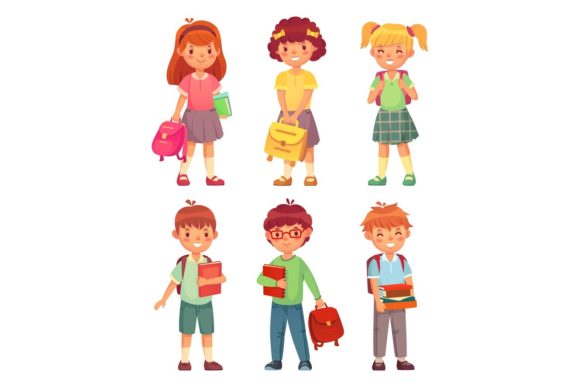
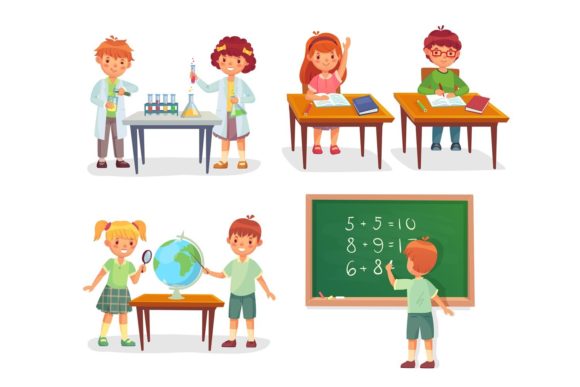
When we observe a pupil education vector cartoon isolated icon illustration set, we are not just looking at cute graphics; we are witnessing a pedagogical tool designed to bridge the gap between abstract theory and concrete understanding. For a primary school pupil, the jump from playing with toys to studying the molecular structure of water or the tectonic plates of the Earth can be daunting. Visual representations serve as cognitive anchors.
Consider a biology lesson. Instead of merely reading about plant cells, a child sees a colorful, friendly illustration of a cell with labeled parts that resemble familiar objects. This method leverages dual-coding theory, where information is processed through both verbal and visual channels, significantly enhancing retention. Similarly, in chemistry, seeing a cartoon depiction of atoms bonding helps demystify the invisible forces at play. These visuals transform intimidating scientific principles into approachable, tangible concepts.
Integrating Geography and Global Awareness
One of the most striking examples of this visual approach is seen in geography lessons. A classic image in many educational resources is that of a schoolchild learn geography globe. This simple act of interacting with a globe is powerful. It moves geography from a list of capital cities to a spatial understanding of our world. When students see illustrations of peers sitting at a desk, pointing to continents, or holding globes, it creates a sense of shared experience. It normalizes the act of inquiry and exploration.
Modern digital assets, such as vector illustrations, allow teachers to customize these scenes. They can highlight specific regions, change the diversity of the characters to reflect their classroom, or focus on specific geographical features. This flexibility ensures that the material remains relevant and inclusive, catering to a diverse student body.
The Role of Digital Assets in Modern Teaching
The demand for high-quality educational content has led to a surge in digital resources. Educators often look for versatile files that can be adapted to various teaching mediums, from printed worksheets to interactive whiteboard presentations. A typical product file for such resources might include:
- One vector EPS10 file: This format is crucial for professional design work. It allows for infinite scalability without loss of quality, meaning an icon can be enlarged to fit a classroom poster or shrunk for a flashcard without becoming pixelated.
- One JPEG 72ppi as a preview: This provides a quick, lightweight view of the asset, useful for online catalogs or quick references before downloading the full vector file.
For those who wish to tailor these resources further, the ability to edit is paramount. If you want to separate elements, remove or edit something, please use a vector editor, e.g., Adobe Illustrator. This capability empowers teachers and content creators to modify illustrations to suit specific lesson plans. For instance, if a lesson focuses solely on chemistry, a teacher might remove the geography globe from a composite image to reduce cognitive load and keep the focus sharp.
Why Vector Graphics Matter in Education
You might wonder why the format matters so much. The answer lies in versatility and clarity. Vector graphics are composed of paths defined by mathematical points, rather than pixels. This means they remain crisp and clear at any size. In an educational context, clarity is key. A blurry image can confuse a young learner, whereas a sharp, clean line drawing helps them identify shapes and labels accurately.
Furthermore, vector files allow for easy color customization. Schools often have specific branding or color schemes for different subjects. Being able to change a blue chemistry beaker to green to match a theme might seem trivial, but it contributes to a cohesive and organized learning environment. This attention to detail helps in creating structured materials that aid in cognitive organization for students.
Practical Applications Across Subjects
The utility of these illustrated sets extends beyond mere decoration. They are functional tools that support various learning activities. Let’s explore how they fit into different subjects:
- Chemistry: Illustrations of lab equipment, safety gear, and molecular structures help students visualize experiments before they perform them. This prepares them for practical lessons and reinforces safety protocols.
- Biology: Diagrams of the human body, plant life cycles, and animal habitats bring biological processes to life. Animated or sequential vectors can show growth stages, making dynamic processes easier to understand.
- Geography: Maps, globes, and cultural icons help students connect physical locations with cultural contexts. Seeing a child interact with a globe encourages curiosity about distant places and peoples.
These applications demonstrate that visual aids are not supplementary; they are integral to effective teaching. They support different learning styles, particularly benefiting visual learners who make up a significant portion of the student population.
Addressing Common Misconceptions
A common misunderstanding is that using cartoons or simplified illustrations "dumbs down" the content. On the contrary, well-designed educational graphics simplify complexity without sacrificing accuracy. They strip away unnecessary details to highlight the core concept. For example, a vector illustration of a desk might omit intricate wood grain textures to focus on the arrangement of books and tools, directing the student’s attention to what matters most in the learning context.
Another assumption is that digital resources replace traditional teaching methods. In reality, they enhance them. A teacher still guides the discussion, asks probing questions, and facilitates understanding. The visual aids serve as a springboard for deeper conversation and inquiry. They are tools in the educator’s toolkit, not replacements for the educator.
Fostering Creativity and Engagement
Beyond academics, these visual resources foster creativity. When students see engaging, friendly illustrations, they are more likely to feel positive about school. This emotional connection is vital for motivation. A child who enjoys looking at their science workbook is more likely to engage with the content actively. Moreover, these images can inspire creative projects. Students might be asked to draw their own versions of the illustrations, reinforcing their understanding through artistic expression.
In the broader context of modern life, the ability to interpret visual information is a critical skill. We live in a visually driven world, from infographics in news media to data visualizations in business. By exposing children to clear, well-structured visual information early on, we are preparing them for future success in various fields. They learn to decode visual cues, understand spatial relationships, and appreciate the power of clear communication.
Conclusion: Building a Foundation for Lifelong Learning
The integration of high-quality visual assets like the Kids on School Lesson illustration sets represents a significant step forward in primary education. By combining the rigor of subjects like chemistry, biology, and geography with the accessibility of vector cartoons, we create a learning environment that is both informative and engaging. Whether it is a pupil sitting at a desk, exploring a globe, or mixing chemicals in a safe, illustrated lab, these images tell a story of curiosity and discovery.
For educators and parents, leveraging these tools means investing in a method that respects the cognitive development of children. It acknowledges that learning is a multifaceted process that benefits from visual stimulation, contextual relevance, and creative flexibility. As we continue to navigate the complexities of modern education, let us embrace resources that make learning not just a requirement, but a joy. By doing so, we help build a generation of learners who are not only knowledgeable but also passionate about understanding the world around them.
To explore more about how visual aids can transform your teaching or homeschooling experience, consider downloading editable vector packs and experimenting with how they can be tailored to your specific educational goals. The right image can indeed be worth a thousand words, especially when those words are helping a child discover the wonders of science and geography.