Social Distancing in Learning to Share: Bridging Physical Gaps with Digital Design
The educational landscape has undergone a seismic shift in recent years, driven by the necessity of social distancing in learning. While the primary focus during this transition was health and safety, a secondary, equally critical challenge emerged: how to maintain the collaborative spirit of education when physical proximity is restricted. This is where the concept of social distancing in learning to share becomes pivotal. It is not merely about staying apart; it is about reimagining how knowledge, resources, and creativity are exchanged in a decentralized environment. For educators, content creators, and digital marketers, understanding this dynamic is essential for developing tools that resonate with modern audiences.
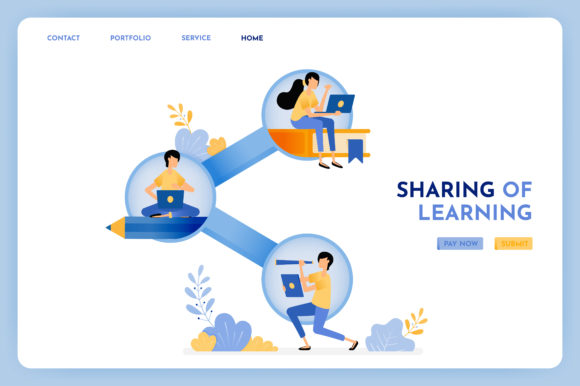
One effective way to visualize and communicate this complex intersection of safety, collaboration, and technology is through high-quality digital assets. Consider, for instance, a design package featuring a 3D style design of pencil, share, and book. Such an illustration serves as more than just decorative art; it acts as a visual metaphor for the new era of education. The pencil represents traditional learning and creation, the book symbolizes established knowledge, and the share icon bridges the gap, indicating the digital transmission of ideas. When designed with precision for landing pages, websites, or UI/UX interfaces, these elements help users instantly grasp the value proposition of remote collaborative tools.
The Role of Technology and Internet Networks in Modern Education
At the heart of social distancing in learning and school to share is robust technology infrastructure. Without reliable internet networks, the promise of remote education remains unfulfilled. However, connectivity alone is insufficient. The user experience must be intuitive, engaging, and visually appealing to keep students and professionals motivated. This is where professional design resources play a crucial role. A well-crafted graphic can reduce cognitive load, making complex concepts easier to digest.
When evaluating digital assets for educational platforms, one must consider versatility. A design package that offers an editable EPS 10 file is particularly valuable. EPS (Encapsulated PostScript) is a vector format, meaning it can be scaled to any size without losing quality. This is critical for designers who need to adapt a single asset for various mediums—from a small mobile app icon to a large-format banner for a conference. The ability to easily change colors, shapes, or components ensures that the design aligns with specific brand guidelines or thematic requirements of different educational institutions.
Evaluating Quality and Usability in Digital Design Assets
For professionals such as marketers, freelancers, and small business owners, time is a scarce resource. Downloading a design package that includes both high resolution and quality JPEG files and editable vector sources provides immediate practical value. The JPEG format is ideal for quick implementation in online contexts, such as social media posts, blog headers, or email newsletters. It ensures fast loading times while maintaining visual clarity on screens.
Conversely, the editable EPS file caters to deeper customization needs. If a school district wants to incorporate its specific color palette into the 3D pencil and book illustration, having the source file allows for precise adjustments. This flexibility enhances the consistency of branding across all touchpoints. Whether used for media ads, website banners, or promotional materials, the asset maintains a professional appearance that reflects well on the institution or business using it.
Moreover, the inclusion of 3D-style elements adds a layer of modernity and depth. Flat design has dominated for years, but 3D illustrations are increasingly popular in UI/UX design because they create a sense of tangibility and engagement. In the context of social distancing in learning to share, a 3D book appearing to float or a pencil connecting to a digital share node can subtly reinforce the idea that learning is active and dynamic, even when conducted remotely.
Practical Applications for Diverse Audiences
Who benefits most from integrating such design resources into their workflow? The audience is broad, ranging from educators creating online course materials to entrepreneurs launching ed-tech startups. Here is how different groups can leverage these assets:
- Educators and Publishers: Can use the imagery in presentation slides, e-books, and learning management systems to break up text-heavy content and improve student engagement.
- Marketers and Bloggers: Can utilize the high-resolution JPEGs for social media campaigns promoting webinars, online courses, or educational blogs. The visual appeal helps capture attention in crowded feeds.
- UI/UX Designers: Can import the EPS files into design software to create custom icons or hero images for educational apps and websites, ensuring a cohesive look and feel.
- Small Business Owners: Can use the designs for offline purposes, such as printing flyers or posters for community education programs, adapting the message to local needs while maintaining professional quality.
The versatility of the package means it supports both online and offline purposes. This dual utility is rare and highly valuable. Many digital assets are optimized solely for screen display, failing to translate well to print due to resolution issues. By providing high-quality files suitable for both, the design package ensures that your marketing and educational efforts remain consistent regardless of the medium.
Long-Term Value and Reliability
Investing in high-quality design resources is not just about immediate aesthetics; it is about long-term reliability. A well-constructed EPS file is future-proof. As display technologies evolve and screen resolutions increase, vector graphics remain crisp. This eliminates the need to constantly redesign assets for new devices or formats. For freelancers and agencies managing multiple clients, having a library of adaptable, high-quality illustrations streamlines the production process.
Furthermore, the theme of social distancing in learning to share is likely to remain relevant. Even as physical classrooms reopen, hybrid learning models are becoming standard. The need to visually communicate the blend of physical and digital learning persists. Assets that depict this synergy—such as a 3D pencil interacting with a digital share symbol—are not tied to a fleeting trend but reflect a structural change in how society approaches education.
It is also worth noting the psychological impact of such designs. Clean, professional, and modern visuals convey competence and trustworthiness. In the ed-tech sector, where users are entrusting their time and often money to learn new skills, establishing trust through high-quality presentation is paramount. A cluttered or low-resolution image can subconsciously signal a lack of professionalism, whereas a polished 3D illustration suggests attention to detail and care for the user experience.
Making the Right Choice for Your Project
When selecting design assets for your next project, consider the specific goals of your campaign or platform. If you are aiming for a modern, tech-forward look, 3D styles are an excellent choice. If you need rapid deployment across multiple social channels, ensure the package includes ready-to-use JPEGs. If brand consistency is key, verify that the EPS files are fully editable and compatible with your design software.
The description "Thank you for downloading, it makes me better at work" highlights a crucial aspect of these resources: they are tools for empowerment. They allow creators to produce higher-quality work more efficiently. By reducing the time spent on creating basic illustrations from scratch, professionals can focus on strategy, content development, and user engagement. This efficiency gain is a significant return on investment, especially for small teams or solo entrepreneurs.
In conclusion, social distancing in learning to share is more than a public health mandate; it is a catalyst for innovation in educational design and delivery. By leveraging technology, internet networks, and high-quality visual assets like 3D illustrations of pencils, books, and share icons, educators and businesses can create compelling, effective, and safe learning environments. Whether for a landing page, a mobile app, or a marketing banner, the right design choices can bridge the physical distance and foster a sense of connectedness and shared purpose. As we continue to navigate this evolving landscape, prioritizing quality, flexibility, and user-centric design will remain essential for success.