Private School Teacher Teaching Pupil: Visual Guide
In the competitive landscape of educational marketing and digital content creation, visual storytelling is not merely an aesthetic choice; it is a fundamental communication tool. When parents, administrators, or prospective students browse a website, they are looking for immediate emotional resonance and clarity. This is where specific assets like a Private School Teacher Teaching Pupil illustration become invaluable. These visuals do more than fill space; they articulate the core mission of an institution—personalized, attentive, and nurturing education.
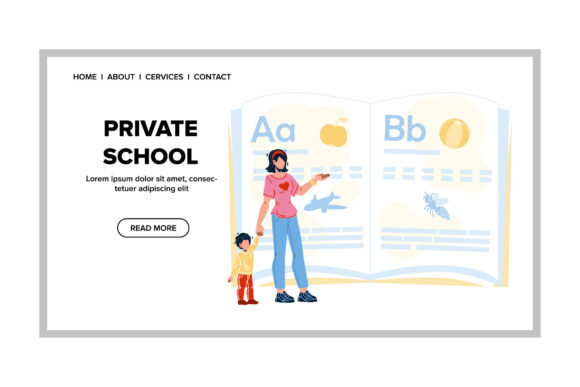
For marketers, web designers, and educational consultants, understanding how to leverage high-quality vector illustrations can significantly enhance user engagement. The specific imagery of a private school worker woman teaching a little child, perhaps reading an ABC book, conveys trust, safety, and academic rigor simultaneously. It bridges the gap between abstract educational promises and tangible, relatable scenarios.
The Strategic Value of Targeted Educational Imagery
Generic stock photography often fails to capture the nuanced atmosphere of private education. A standard classroom photo might show thirty students and one overwhelmed teacher, which contradicts the primary selling point of many private institutions: low student-to-teacher ratios. By utilizing a focused illustration of a Private School Teacher Teaching Pupil, you highlight the individual attention that defines the private school experience.
This type of imagery serves several strategic purposes. First, it simplifies complex value propositions. Instead of writing paragraphs about mentorship, a flat cartoon illustration of a girl and a small boy studying with a dedicated instructor instantly communicates the concept. Second, it creates a consistent brand identity. Vector graphics, available in formats like EPS, AI, and SVG, allow for seamless integration into various digital platforms without losing quality. Whether used on a mobile-responsive landing page or a large-format brochure, the crisp lines and vibrant colors maintain professionalism.
Furthermore, these illustrations reduce cognitive load for the viewer. In web design, clarity is king. A clean, flat cartoon style avoids the visual noise of busy photographs, allowing the user to focus on the message. When a parent sees a calm, focused scene of a teacher helping a child read, they subconsciously associate the school with patience and effectiveness.
Versatility Across Digital and Print Media
One of the most practical benefits of using vector-based assets, such as those provided in AI, EPS, or PSD formats, is their adaptability. Unlike raster images that pixelate when scaled, vectors remain sharp at any size. This is crucial for modern multi-channel marketing campaigns. You might need a tiny icon for a navigation menu, a medium-sized graphic for a blog post header, and a large banner for a conference display. A single Private School Teacher Teaching Pupil Kid Vector file can serve all these needs.
Consider the workflow of a social media manager. They need to create quick, engaging posts for Instagram, LinkedIn, and Facebook. Having access to layered PSD or PNG files allows them to customize the scene. Perhaps they want to change the book title to match a current literacy campaign or adjust the colors to align with seasonal branding. This flexibility saves time and reduces dependency on external design agencies for minor updates.
For web developers, the availability of SVG-compatible vectors means faster loading times and better SEO performance. Search engines favor websites that provide a smooth user experience, and optimized graphics play a significant role in page speed. By using lightweight vector illustrations instead of heavy photographic files, you improve site performance while maintaining visual appeal.
Enhancing Emotional Connection Through Character Design
The characters in these illustrations—the teacher, the girl, and the small boy—are not just decorative elements; they are avatars for your audience. The teacher represents expertise and care, while the children represent potential and curiosity. When designed effectively, these characters evoke empathy. A flat cartoon style, often perceived as friendly and approachable, lowers barriers for anxious parents who may be hesitant about enrolling their children in a new environment.
Specific details matter. For instance, an illustration showing a Private School Worker Woman Teach Little Child, Reading Abc Book taps into foundational educational milestones. It reminds viewers of the early stages of learning, evoking nostalgia and hope. This emotional trigger can be powerful in conversion-focused content, such as enrollment pages or donation appeals for educational nonprofits.
Moreover, diverse representation in these characters can broaden your appeal. Including a girl and a small boy studying together suggests inclusivity and peer collaboration, values that are increasingly important to modern families. It signals that the school environment is balanced and socially supportive, not just academically rigorous.
Practical Applications for Educators and Marketers
To maximize the impact of these visual assets, consider integrating them into specific touchpoints of the user journey. Here are several practical applications:
- Homepage Hero Sections: Use a high-resolution PNG or SVG of the teacher and pupil as the central visual element. Pair it with a clear headline about personalized learning to immediately establish your unique value proposition.
- Blog Post Illustrations: Break up text-heavy articles about curriculum or teaching methodologies with relevant vector scenes. This keeps readers engaged and helps illustrate key points visually.
- Email Newsletters: Incorporate small icons or banners featuring the characters to make newsletters feel more personal and less corporate. This can increase open rates and click-throughs.
- Presentation Decks: For school board meetings or parent orientations, use these graphics to soften data-heavy slides. They make the presentation more accessible and memorable.
It is also important to consider the context. While a flat cartoon style is excellent for digital interfaces and informal communications, ensure it aligns with your overall brand tone. If your institution positions itself as ultra-traditional or elite, you might opt for a more refined, muted color palette within the vector files. Conversely, for progressive or early-childhood centers, bright, bold colors work best.
Selecting the Right Format for Your Needs
Understanding the technical differences between file formats ensures you get the best results. JPGs are suitable for quick previews or web use where transparency is not needed, but they lack editability. PNGs offer transparency, making them ideal for overlaying on colored backgrounds. However, for true flexibility, AI and EPS files are superior. They allow designers to modify every element, from the shape of the books to the expression on the teacher’s face.
PSD files are particularly useful for teams using Adobe Photoshop, enabling layer-based editing. This is beneficial if you need to composite the illustration with other photographic elements or apply specific textures. Always keep the original vector files archived so you can return to them for future projects without quality loss.
In conclusion, investing in high-quality, specific illustrations like a Private School Teacher Teaching Pupil is a strategic move for any educational brand. It enhances communication, supports branding consistency, and improves user experience across digital and print media. By choosing versatile formats and focusing on emotional resonance, you can create a visual narrative that truly connects with your audience and supports your institutional goals.