Mastering Online Education Study Advertising
In the rapidly expanding digital learning landscape, visibility is just as critical as curriculum quality. Online education study advertising serves as the bridge between valuable educational content and the students who need it most. Whether you are an independent tutor, a large university, or a corporate trainer, the ability to communicate your value proposition visually and clearly determines your success. This process involves more than just posting a link; it requires strategic design, clear messaging, and an understanding of how different audiences consume information.
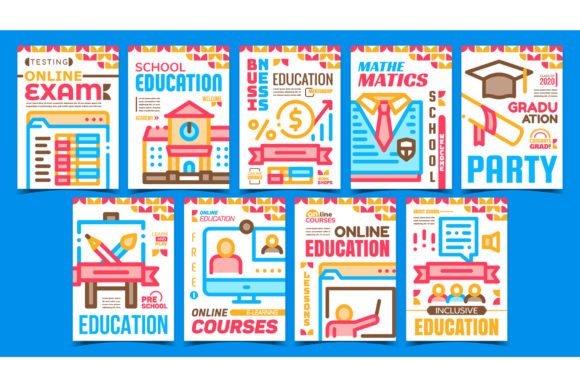
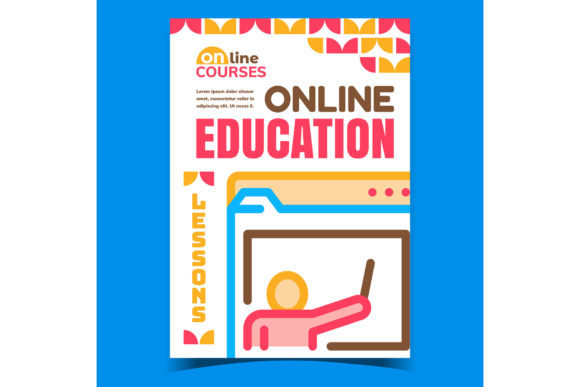
At its core, this form of advertising utilizes visual assets—such as promotional posters, banner vectors, and stylish color illustrations—to capture attention in a crowded feed. A well-crafted teacher teaching internet online courses promotional poster does not merely announce a class; it invites the viewer into a learning experience. By leveraging high-quality formats like JPG for web use and EPS for scalable printing, educators and marketers can ensure their message remains crisp across all devices and mediums.
Why Visual Identity Matters in Digital Learning
The concept of an educational lessons and webinar concept template might seem like a minor detail, but it plays a pivotal role in perceived credibility. When a potential student encounters an ad, they make split-second judgments about the professionalism of the course. A disjointed or amateurish graphic suggests a disjointed learning experience. Conversely, a cohesive, stylish color illustration signals that the instructor has invested time and resources into quality.
For beginners entering the e-learning space, the priority is often ease of use and cost-effectiveness. They may rely on pre-made templates to get started quickly. These individuals benefit from assets that are easy to customize, allowing them to swap out text and images without needing advanced graphic design skills. The focus here is on speed and reliability, ensuring that the marketing material does not become a bottleneck to launching the course.
Professionals and established institutions, however, have different priorities. For them, brand consistency and unique identity are paramount. They are less likely to use generic templates and more likely to commission custom vector graphics. Their evaluation criteria shift toward long-term usefulness and commercial value. They need assets that can be scaled for billboards, social media headers, and email newsletters without losing resolution. This is where the versatility of EPS formats becomes essential, allowing for infinite scalability while maintaining sharp edges and clean lines.
Tailoring Strategies for Different Audiences
Understanding who you are speaking to changes how you approach online education study advertising. A one-size-fits-all approach rarely yields optimal results. Let us explore how different groups interact with these promotional tools.
Entrepreneurs and Small Business Owners
For entrepreneurs selling specialized skills, such as coding bootcamps or business strategy workshops, the advertising must highlight tangible outcomes. Their audience is looking for a return on investment. Therefore, promotional posters should feature bold headlines that promise specific results, such as "Master Python in 30 Days" or "Scale Your Startup." The visual style should be modern and dynamic, reflecting the fast-paced nature of the tech or business world. These creators often prioritize flexibility, needing ads that can be quickly tweaked to test different value propositions.
Educators and Academic Institutions
Traditional educators transitioning to online platforms face the challenge of translating academic rigor into digital appeal. Their advertising needs to convey trust and authority. A teacher teaching internet online courses promotional poster for this group might feature a professional photograph of the instructor, combined with clean, serif typography that evokes tradition and stability. The color palette is often more subdued, focusing on blues and grays that suggest calmness and intellect. For these users, the quality of the illustration is secondary to the clarity of the credentials and course structure displayed.
Creatives and Hobbyists
Artists, writers, and hobbyists offering creative workshops have the freedom to be more experimental. Their advertising can be vibrant, abstract, and highly stylized. A webinar concept template for a watercolor class might use soft, flowing shapes and pastel colors to evoke the feeling of painting. Here, creativity is the primary driver. The audience for these courses is looking for inspiration and enjoyment, so the advertising must spark an emotional response. These creators often evaluate assets based on aesthetic uniqueness and the ability to stand out in a visually saturated market.
Practical Applications and Format Selection
Choosing the right file format is a practical decision that impacts both workflow and final output. Understanding the difference between JPG and EPS is crucial for effective campaign management.
- JPG (Joint Photographic Experts Group): This format is ideal for web-based advertising. It offers small file sizes, which ensures fast loading times on websites and social media platforms. For bloggers and marketers running paid ads on Instagram or Facebook, JPGs are the standard. They support millions of colors, making them perfect for the stylish color illustrations often used in educational promos. However, JPGs are raster images, meaning they lose quality when enlarged.
- EPS (Encapsulated PostScript): This vector format is essential for print and large-scale displays. If you plan to print banners for a conference, create merchandise, or design large posters for a physical campus, EPS is the required format. Vectors are made of mathematical paths, not pixels, so they can be scaled to any size without becoming pixelated. Professionals and publishers prefer EPS because it allows for easy editing of individual elements, such as changing the color of a specific icon or adjusting the thickness of a line.
By maintaining a library of both formats, you ensure that your online education study advertising is ready for any channel. You can use the JPG for immediate digital deployment and the EPS for future print needs or major redesigns.
Evaluating Success and Long-Term Value
Ultimately, the effectiveness of your advertising efforts should be measured against your specific goals. Are you aiming for brand awareness, direct enrollments, or community building? Each objective requires a different approach to design and messaging.
For those focused on direct enrollments, clarity is key. The call-to-action must be prominent, and the benefits of the course should be immediately obvious. For brand building, consistency in visual style across all materials helps establish recognition over time. Hobbyists and casual learners may respond better to friendly, approachable designs, while corporate clients may prefer sleek, minimalist aesthetics.
It is also important to consider the learning value communicated through the ad. Does the graphic suggest a structured, step-by-step process? Or does it imply a free-form, exploratory experience? Aligning the visual tone with the actual teaching style prevents mismatched expectations and reduces refund rates. When the advertising accurately reflects the course content, you attract students who are genuinely interested and likely to succeed.
In conclusion, whether you are a beginner creating your first flyer or a seasoned marketer managing a global campaign, the principles remain the same. Use high-quality visuals, choose the right format for the medium, and tailor your message to your specific audience. By treating your promotional materials as an integral part of the educational experience, you enhance both your reach and your reputation in the competitive world of online learning.